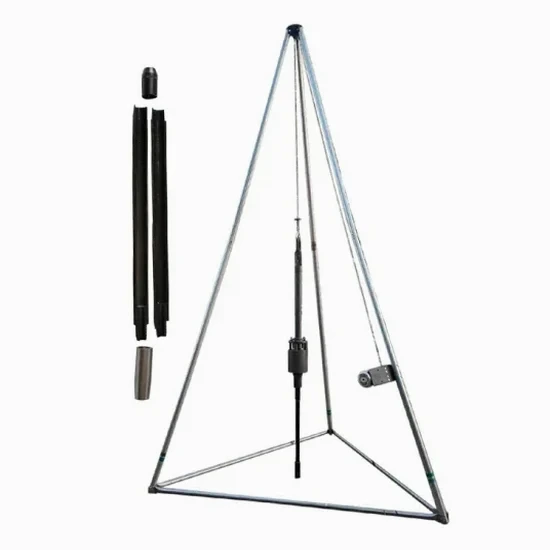
Richmond sits at the fall line where the Piedmont meets the Coastal Plain, creating one of the most geologically abrupt transitions on the East Coast. At roughly 166 feet above sea level near Capitol Square, the elevation drops quickly eastward onto soft alluvial terraces of the James River. This means two lots half a mile apart can have completely different bearing strata. We’ve pulled split-spoon samples from decomposed granite saprolite in The Fan and, the same week, hit loose estuarine silts in Shockoe Bottom. Getting the blow count right isn’t optional when column loads change that fast across a site. Our SPT program follows ASTM D1586 with an automatic trip hammer on rotary rigs — calibrated every 40 borings, no exceptions. For sites where refusal is shallow, we often combine SPT with CPT soundings to fill the stratigraphic gap in the upper weathered zone, and on river-adjacent parcels we cross-check with test pits to verify fill thickness before the drill crew even mobilizes.
The uncorrected N-value means little in Richmond without knowing whether you're in natural Piedmont residuum or reworked fill from the 1800s.
Technical details of the service in Richmond Virginia
Critical ground factors in Richmond Virginia
The IBC 2021 and ASCE 7-22 require Site Class determination based on the upper 100 feet of the soil column, and Richmond’s transition geology makes a default Class D assumption costly. A site in Westhampton with 15 feet of stiff saprolite over partially weathered rock might classify as Site Class C — reducing the seismic design base shear compared to the default Class D by 15 to 20 percent. But drive three miles east into the Shockoe Valley, and 60 feet of soft Holocene alluvium pushes you into Site Class E or F, with liquefaction potential that demands a site-specific response analysis. We’ve seen projects where skipping the SPT program led to a foundation redesign six months into construction because the geotechnical report assumed residual soil where none existed. The James River’s historic floodplain sediments include lenses of organic silt that compress under load — a 30-foot boring with SPT every 2.5 feet is the minimum to catch those layers before the structural engineer sizes the footings. For sites flagged with low N-values, we recommend coupling the investigation with a liquefaction assessment that follows the Seed and Idriss simplified procedure, calibrated to the Central Virginia seismic hazard model.
Our services
Below are the core field and lab services that accompany our SPT program. Each one is executed by the same team that logs the borehole — no subcontracting to an outside lab, no chain-of-custody gaps.
SPT Drilling with Automatic Hammer
Track-mounted or limited-access drill rigs with auto-trip hammer calibrated to ASTM D4633. Continuous sampling at 2.5-foot intervals through overburden, with refusal documented when 50 blows yield less than 6 inches of penetration. Every boring logged by a Virginia-licensed driller and a geotechnical engineer on site.
Laboratory Classification Suite
Grain size distribution by sieve and hydrometer (ASTM D6913/D7928), Atterberg limits (ASTM D4318), and natural moisture content on every split-spoon sample. Classification per USCS with a 3-day turnaround from our Richmond lab so foundation recommendations stay on schedule.
Liquefaction Screening & Site Class Report
For sites east of I-95 or within the James River floodplain corridor, we run a screening-level liquefaction analysis using SPT blow counts and fines content, then deliver Site Class letter per ASCE 7-22 with spectral acceleration parameters for the structural engineer.
Common questions
How many SPT borings does Richmond building code require for a commercial structure?
The IBC 2021, which Richmond enforces, doesn't specify a fixed number — it ties the exploration scope to the building footprint and subsurface variability. For a typical 10,000-square-foot commercial building on a single lot, we recommend a minimum of three borings arranged in a triangular grid, each extending to at least 30 feet or refusal on weathered rock, whichever comes first. The Virginia Uniform Statewide Building Code also requires that borings be located within the building footprint, not just on the property perimeter. If the site crosses a mapped geologic contact — common near the fall line — the building official may require additional borings to bracket the transition zone.
What is the typical cost range for SPT drilling in Richmond VA?
For most commercial and residential projects in the Richmond metro area, an SPT investigation with three to five borings to 30-foot depths typically falls between US$600 and US$830 per boring, including mobilization within the city limits, the auto-hammer drilling, field logging, and a geotechnical report with foundation recommendations. Deeper borings, limited-access rigs for tight urban sites, or projects requiring traffic control on city streets add to the base rate. We provide a fixed-price proposal after reviewing the site address and any available soil survey data — no open-ended day-rate billing.
How deep do you typically drill SPT borings in the Richmond area?
It depends entirely on where the site sits relative to the fall line. In the western suburbs and near the James River bluffs, we often hit refusal on partially weathered Petersburg Granite between 20 and 35 feet. In the eastern floodplain and Shockoe Valley, we routinely drill to 50 or 60 feet before encountering competent bearing strata. The rule of thumb we follow: borings must extend through all compressible layers and at least 10 feet into material with N-values above 30, or to refusal on rock — whichever comes first. For mat foundation designs on soft sites, we may go deeper to satisfy the stress bulb requirement.