In Richmond, the transition from the crystalline bedrock of the Piedmont to the soft alluvial deposits of the James River floodplain creates a hydrogeological puzzle that standard lab tests simply cannot solve. We repeatedly encounter sites near the Fall Line where a few feet of lateral shift completely changes the permeability regime—from tight residual silts to fractured Petersburg granite with high secondary conductivity. The field permeability test becomes essential for capturing these formation-scale flow paths that a Shelby tube sample will never represent. Rather than relying on grain-size correlations alone, we lower a packer or a simple casing to isolate the test interval and measure actual water take under controlled pressure, giving the design team a defensible hydraulic conductivity value for dewatering plans, cutoff wall specifications, or grouting programs. This data often complements our in-situ density testing when evaluating compacted clay liners for stormwater management ponds required by the City of Richmond's Department of Public Utilities.
The Lugeon value is not just a number—it's a direct measurement of how the rock mass accepts water under pressure, reflecting the combined effect of fractures, joints, and weathering that no lab permeameter can reproduce.
Technical details of the service in Richmond Virginia
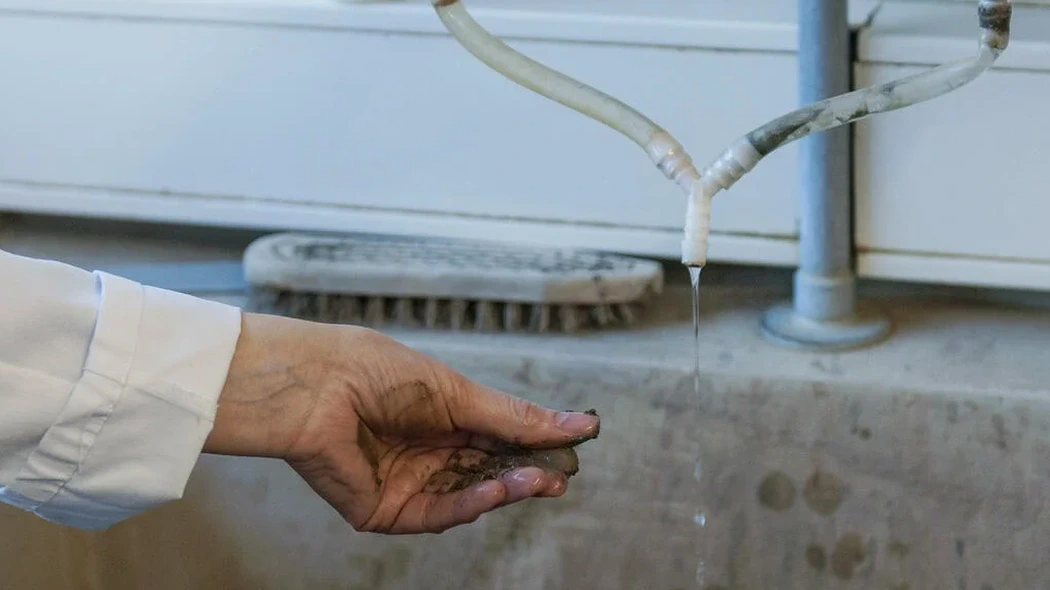
Field demonstration
Critical ground factors in Richmond Virginia
Richmond sits at an elevation ranging from roughly 20 feet above sea level at the riverfront to over 200 feet in the higher neighborhoods, and this topographic gradient drives significant groundwater movement through the underlying rock fractures. Mischaracterizing the permeability of the weathered zone—often 30 to 60 feet thick in the Petersburg granite terrain—can lead to catastrophic dewatering failures during deep excavations. We have reviewed projects where contractors bid based on lab permeability tests on intact rock cores, only to encounter an order-of-magnitude higher conductivity from open fractures discovered during shaft sinking, triggering costly change orders and months of delay. The Lugeon test is the only field method that applies controlled pressure to open and measure the hydraulic aperture of these fractures, providing a realistic inflow estimate. Ignoring this step in a city with Richmond's complex transition geology—from the Coastal Plain sediments east of I-95 to the Piedmont crystalline rocks to the west—is an unnecessary gamble that can stall a foundation pour or flood a cut-and-cover tunnel.
Our services
Our Richmond-area field permeability testing program is structured around the specific geological challenges of the James River corridor and the Piedmont bedrock, with three service tiers depending on project depth and rock mass characteristics.
Lefranc Testing in Soil
Constant- and falling-head tests in open boreholes through alluvial sands, terrace deposits, and residual silts. We use a slotted PVC casing with a sand pack to prevent fines migration, and measure water level recovery with pressure transducers for a high-resolution data curve. Ideal for dewatering system design in the Shockoe Valley and for infiltration rate verification at stormwater BMPs.
Lugeon Testing in Rock
Single- and double-packer tests in NQ or HQ boreholes drilled into the Petersburg granite and associated metamorphic rocks. We follow a five-pressure stage sequence (low-medium-high-medium-low) to detect fracture dilation, turbulent flow, or infilling erosion. Each test interval is logged with RQD and fracture orientation data for a complete geomechanical context.
Combined Permeability and Grouting Assessment
For dam curtain design or deep shaft pre-grouting, we execute a test section of Lugeon measurements before and after grouting to quantify the permeability reduction. The program includes real-time pressure-flow plotting, grout take analysis, and a final report with recommended grout mix and injection pressures calibrated to the fracture aperture distribution.
Common questions
What is the difference between a Lefranc test and a Lugeon test, and when do I need each?
The Lefranc test measures hydraulic conductivity in soil or very soft rock using a simple open casing—it's a falling-head or constant-head test in unconsolidated material. The Lugeon test is a packer-isolated pressure injection test specifically for fractured rock, where you inflate a packer to seal off a section of the borehole and inject water under controlled pressure. You need Lefranc for alluvial soils and decomposed granite in Richmond, and Lugeon when your boring hits competent but fractured Petersburg granite, especially for dam foundations or deep shafts where fracture flow dominates.
How much does a field permeability test cost in Richmond, VA?
For a Lefranc or Lugeon test program in the Richmond area, budgets typically range from US$630 to US$1.040 per test interval, depending on depth, access conditions, and the number of stages required. A full Lugeon profile with five pressure stages in a deep rock boring will be at the upper end of that range due to the time and equipment involved. We provide a firm quote after reviewing your boring logs and project specifications.
How do you select the test intervals for a Lugeon test in Richmond's geology?
We base interval selection on the rock quality designation (RQD) log, fracture frequency, and weathering profile from the drilling log. In Richmond's Petersburg granite, we typically test the first competent rock zone below the weathered mantle, then every 10 to 20 feet through zones with visible fracturing or water loss during drilling. Each interval is isolated with a pneumatic packer, and we run the five-pressure stage sequence to check for fracture dilation or erosion. The goal is to capture the permeability of each distinct fracture set, not to average the entire borehole.
Can the Lugeon test predict grout consumption for a cutoff wall?
Yes, the Lugeon value directly correlates with grout take in fractured rock. In our experience on James River dam projects, intervals with Lugeon values above 10 typically require significant grout volumes, while values below 3 Lugeons indicate tight rock that may not accept cement-based grouts without high pressure. We use the pressure-flow curves from the test to identify the fracture behavior type (laminar, turbulent, dilation, or washout) and design the grouting program accordingly—matching the grout rheology and injection pressure to the aperture characteristics measured during the test.