ASCE 7 and IBC set the baseline, but in Richmond, Virginia, the soil writes the spec. The shrink-swell potential of the local Triassic basin clays means a rigid pavement design is not just a slab choice; it's a structural decision. We see it every day on projects near the James River and out toward the I-295 corridor. The subgrade reaction modulus (k-value) here can swing dramatically between wet and dry seasons. So we don't design from a textbook table. We design from site-specific test pits data. That's how you control curling stress and joint performance. That's how a pavement handles the load for 20 years.
In Richmond's Triassic clay, the k-value from a plate load test dictates the slab thickness more than the truck axle load does.
Technical details of the service in Richmond Virginia
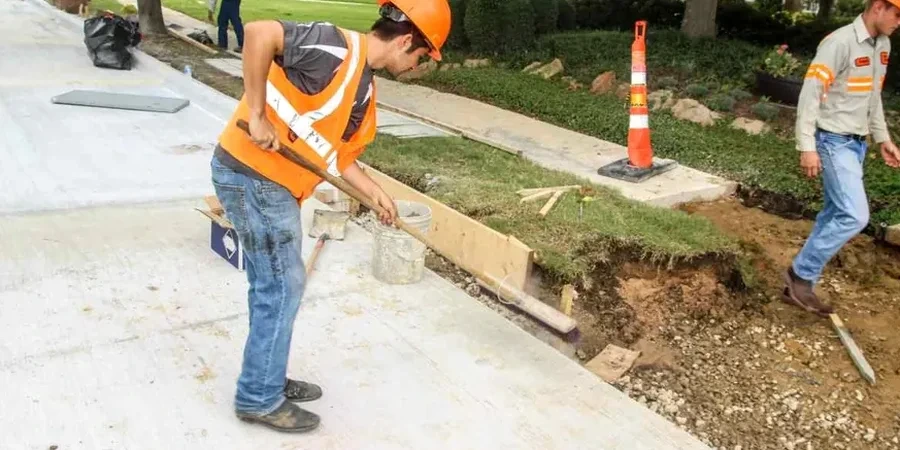
Critical ground factors in Richmond Virginia
The heavy iron we use for plate load testing on a Richmond site tells the real story. A 30-ton reaction frame and a hydraulic jack pressing a 30-inch plate into the subgrade. The dial gauges measure deflection in thousandths of an inch. If that deflection curve isn't straight and repeatable, the design is compromised. The risk of skipping this step is a pavement that pumps fines at the joints after two freeze-thaw cycles. That's a six-figure repair. We run the test at the actual elevation of the subgrade, not from the surface. That's a local practice born from dealing with a weathered crust that's softer than the material just two feet below it.
Our services
Our approach to rigid pavement design covers the full slab system, from the subgrade up. We handle the geotechnical interface so the structural design works on real ground.
Subgrade Reaction Testing
On-site plate load tests to determine the modulus of subgrade reaction (k-value) at the actual subgrade elevation in your Richmond location.
Joint Design and Detailing
Specification of joint spacing, dowel bar size, and tie bar placement based on local temperature gradients and traffic loads.
Base and Subbase Characterization
Grain size analysis and CBR testing of the granular base to ensure adequate drainage and a uniform support layer.
Performance Specification
A complete package with slab thickness, concrete flexural strength requirements, and construction tolerances ready for your contractor.
Common questions
Why does rigid pavement design cost more upfront in Richmond?
The initial cost typically ranges from US$1,640 to US$7,240 for a full design package, depending on the lot size and number of test locations. The investment is in the site-specific subgrade testing that Richmond's clay soils demand. A design based on assumed values often leads to overdesign (wasting concrete) or underdesign (cracking). Our fee covers the plate load testing, lab analysis, and the engineering report that justifies every inch of slab thickness to the building official.
How does the local Triassic clay affect slab thickness?
The Triassic basin clays in Richmond lose significant bearing capacity when wet. If a rigid pavement is designed using a dry-weather k-value, the slab will be too thin for wet season conditions. We measure the k-value under saturated conditions to capture the worst-case scenario, which is a standard practice for our projects in the region.
What's the difference between a rigid pavement and a reinforced industrial floor?
A rigid pavement typically refers to an exterior pavement that relies on the flexural strength of the concrete slab to distribute loads to the subgrade, with joints to control cracking. A reinforced industrial floor often uses steel reinforcement to handle concentrated loads from racking. Our rigid pavement design focuses on jointed plain concrete pavements (JPCP) for roads, parking lots, and container yards.
Do you handle the QA/QC testing during construction?
Yes. We provide field technicians to perform fresh concrete testing (slump, air content, cylinders) and post-construction verification. This includes checking dowel bar alignment with a MIT Scan device and confirming the joint saw-cut depth and timing. It's the only way to ensure the rigid pavement matches the design intent.
What's the minimum CBR value you need for a rigid pavement?
For a rigid pavement design, we are more concerned with the k-value than the CBR. However, the CBR of the subgrade is still tested to design the base layer thickness. We typically look for a CBR of 3% or higher in the natural subgrade. If the CBR is lower, we design a thicker aggregate subbase or recommend soil stabilization before placing the slab.