Richmond's development tells a story of geology. The historic Shockoe Slip and Shockoe Bottom districts, once vital to the city's commerce, sit on deep alluvial deposits from the James River, while Church Hill rises on much older, firmer Tertiary sands. This abrupt transition from soft river sediment to stiff upland soils has shaped construction here for over two centuries. When developers broke ground on the newer projects around Scott's Addition, they quickly discovered that what worked structurally in the Fan District wasn't directly transferable. A thorough soil mechanics study has to account for this fractured subsurface reality. We combine lab testing under ASTM D2487 with a practical understanding of how these formations behave under load, something you only get from working project after project across the city's distinct geological zones. The fall line running right through downtown Richmond creates challenges that standard textbook approaches often miss.
Understanding Richmond's soils means understanding the fall line. It's not one geology; it's two colliding right under the city.
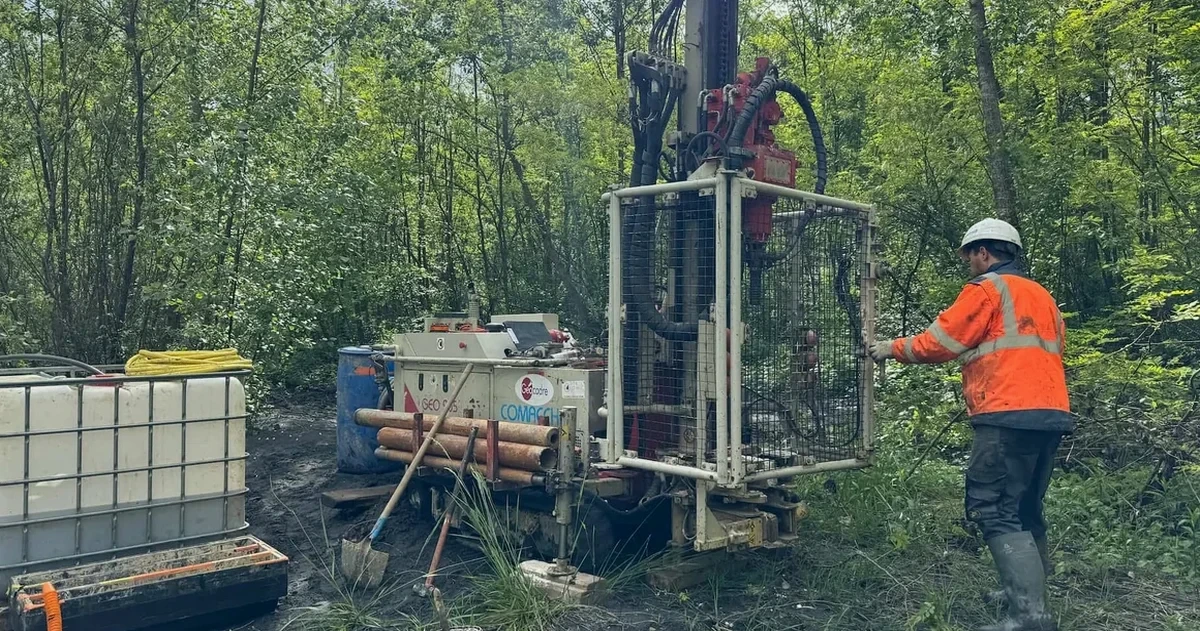
Technical details of the service in Richmond Virginia
Critical ground factors in Richmond Virginia
One thing we've learned working along the James River corridor is that the water table here is not just high, it's active. In the Bottom and Manchester areas, we often see the groundwater fluctuate several feet seasonally. If your soil mechanics study only looks at dry strength parameters, you're missing half the picture. Effective stress analysis is critical because a saturated silty sand behaves very differently than the same material when it's drained. We've reviewed projects where basement excavations turned into dewatering nightmares simply because the report underestimated the permeability of a thin sand lens. The IBC and local building code amendments require a site-specific investigation for a reason. Skipping a comprehensive mechanics evaluation in a city built on such variable fill and alluvium is a gamble that rarely pays off.
Our services
Our laboratory in Richmond is set up to handle the specific demands of local projects, from small lot redevelopments in Church Hill to larger commercial work out toward Short Pump. We focus on delivering data that civil and geotechnical engineers can use directly in their models.
Index Property & Strength Testing
Atterberg limits, grain size analysis, and unconfined compression tests to classify Richmond's native silts and clays accurately per ASTM standards.
Consolidation & Shear Analysis
We run incremental consolidation and direct shear tests to quantify settlement potential and bearing capacity, essential for designing foundations on the Coastal Plain deposits east of I-95.
Common questions
What does a soil mechanics study include for a Richmond building permit?
It typically includes a subsurface exploration plan, lab testing for classification and strength (per ASTM), and an engineering report with foundation recommendations. The City of Richmond reviews these against the Virginia Uniform Statewide Building Code, which adopts the IBC.
How long does the lab testing phase usually take?
Standard classification and strength tests can be completed in about two to three weeks. Consolidation testing adds time because we have to let the saturated samples settle under load incrementally, which can extend the schedule by another week depending on the soil type.
What's the typical cost range for a soil mechanics study in Richmond?
For a standard residential or light commercial lot in the Richmond area, you're generally looking at a range of US$3,240 to US$6,010, depending on the depth of borings and the specific lab tests recommended by the geotechnical engineer.
Do you handle the drilling and sampling, or just the lab work?
We coordinate the entire process. Our team manages the drilling subcontractors on site, handles the sample transport under chain-of-custody, and performs all lab testing. You get one point of contact from the first rig visit to the final signed report.
Why is Richmond's soil so variable compared to other parts of Virginia?
Richmond sits on the fall line, the geological boundary between the hard crystalline rock of the Piedmont and the soft sediments of the Atlantic Coastal Plain. This means you can find stiff residual soils, weathered rock, and compressible alluvium all within a few blocks, a complexity that demands a tailored geotechnical approach.