In Richmond, we often see pavement failures that trace back to ignoring the Piedmont's residual soils. A standard section won't cut it here. The transition zone between the Coastal Plain and the Piedmont creates highly variable subgrades—decomposed granite and Cecil sandy loam that lose strength fast when wet. Our flexible pavement design work for projects from Scott's Addition to Chesterfield County starts with a forensic look at the subgrade, because Richmond's humid subtropical climate means water is always part of the equation. Before we spec an asphalt thickness, we need to understand the soil's resilient modulus. That's where a CBR test for road design becomes the foundation of the whole structural number calculation, not an afterthought.
A Richmond pavement section lives and dies by its drainage. If the base course holds water, even the best asphalt mix will rut in two summers.
Technical details of the service in Richmond Virginia
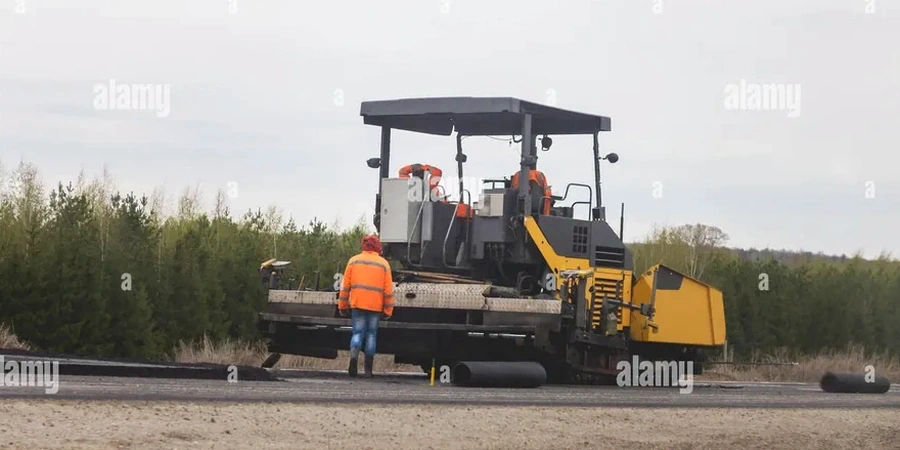
Critical ground factors in Richmond Virginia
The Fan District versus a new industrial park out by the airport: two different worlds for pavement risk. The Fan's old fill and mature trees create swelling clay pockets that heave asphalt in winter and crack it by March. Near the airport, we deal with deeper sands but a high water table that weakens the subgrade from below. Skipping a proper subsurface investigation in Richmond often means reflective cracking within two years. Another silent killer is the freeze-thaw cycling we get from December through February—it works on the asphalt binder and oxidized pavements start to ravel. If the base course isn't free-draining, you trap that melt water and the structural section pumps itself apart by spring.
Our services
We provide the full pavement design package, from field investigation to final thickness recommendations stamped by a Virginia-licensed engineer.
Subgrade Evaluation
CBR and resilient modulus testing on Shelby tube samples and bulk samples from test pits to establish the design Mr value for the roadbed soil.
Traffic Analysis
ESAL projections based on VDOT vehicle classification counts for the project's design life, typically 20 years for flexible pavements.
Layer Optimization
We model multiple cross-sections using AASHTOWare to find the most cost-effective combination of locally available base and asphalt materials.
Drainage Design
Permeability testing of base course materials and design of edge drains or permeable bases to prevent saturation of the structural section.
Common questions
What does a flexible pavement design package cost in Richmond?
For a typical commercial lot or access road in Richmond, our design packages range from US$1,530 for a basic section recommendation to US$5,910 for a full AASHTO analysis with lab resilient modulus and multiple layer options. The scope depends on the project's ESALs and the variability of the site subgrade.
How deep do you investigate for a flexible pavement design?
We typically investigate to a depth of 1.5 times the pavement structural section, at minimum 4 feet below subgrade. In Richmond's Piedmont, where saprolite can extend tens of feet, we confirm the depth to competent material and check for a seasonal high water table that would influence the design.
Do you use the AASHTO '93 or MEPDG method?
We default to the AASHTO 1993 Guide for most projects because VDOT still references it and it's well-calibrated for Virginia's climate. For high-volume interstates or design-build projects with specific warranty requirements, we can run a Level 2 MEPDG analysis using Richmond's climate station data.
How does Richmond's Cecil soil affect pavement design?
Cecil sandy loam is a residual soil from granite weathering, common across Richmond. It drains well on the surface but the underlying saprolite can hold water. The transition zone between the loam and the saprolite is where we see the weakest resilient modulus values, so our designs often include a thicker subbase layer to bridge that zone.
What is the typical pavement section for a Richmond parking lot?
For a commercial parking lot with cars and occasional delivery trucks, we often end up with 2 inches of surface mix over 3 inches of intermediate over 6 inches of #21A stone base. But that's only after we verify a design CBR of at least 6% in the subgrade. Soil conditions change block by block in Richmond, so we never spec a section without testing.