The Piedmont fall line cuts directly through Richmond, creating a stark contrast between the crystalline bedrock to the west and the deep marine sediments of the Coastal Plain to the east. That boundary means a single project site here can contain everything from stiff residual silts to highly plastic clays deposited by the ancient James River. We run Atterberg limits testing under ASTM D4318 to quantify exactly where your soil falls on that spectrum. Liquid limit, plastic limit, and the resulting plasticity index are not just numbers—they identify how the ground will behave when it gets wet. This data feeds directly into foundation bearing capacity checks and slope stability models for any cut deeper than four feet in the Tri-Cities clay belts.
A plasticity index above 25 in Richmond's Triassic Basin clays signals active shrink-swell behavior—ignore it and your slab will crack within two seasonal cycles.
Technical details of the service in Richmond Virginia
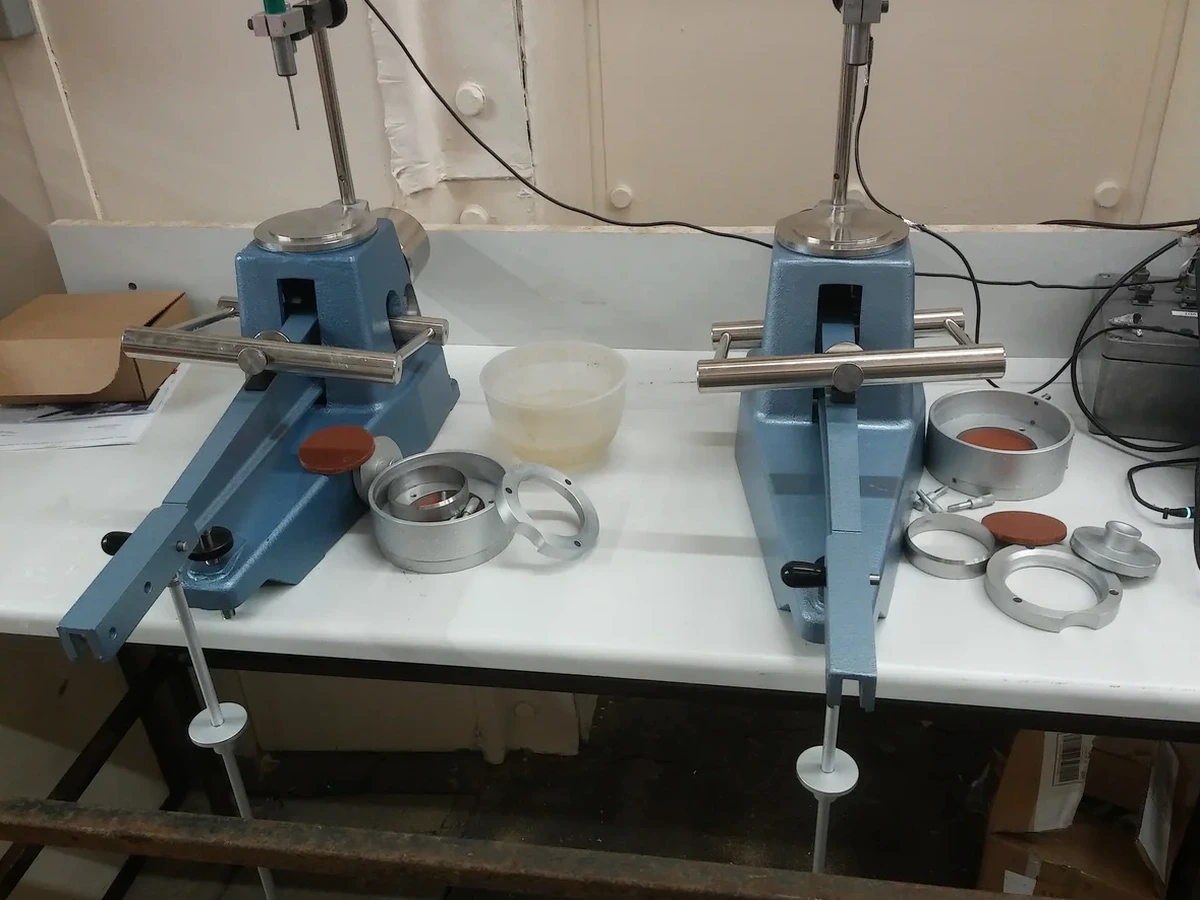
Critical ground factors in Richmond Virginia
Sites along the James River near the Huguenot Bridge behave completely differently from those up in the West End on decomposed granite. The river terrace deposits are often high-plasticity clays with a liquid limit exceeding 60%. Those soils hold water, expand in winter, and lose significant shear strength during the summer thunderstorms that hammer central Virginia. If you treat them like the sandy loams found further north near Ashland, you'll under-design the foundation. We quantify that risk directly through the liquidity index. A liquidity index near or above 1.0 in a normally consolidated Coastal Plain clay tells you the soil is close to remolding under load, which triggers the strict prescriptive requirements in the IBC Chapter 18 for expansive soils.
Our services
Our lab work is integrated with field sampling programs across the Richmond metro to ensure the results you get reflect actual ground conditions.
Lab Classification
Full Atterberg limits (LL, PL, PI) with natural moisture content and USCS classification for undisturbed and remolded samples.
Integrated Field Programs
Paired with SPT drilling or test pit sampling across the seven hills of Richmond, we ensure sample integrity from the split spoon to the lab bench.
Common questions
What does the plasticity index tell me about my Richmond site?
The PI is the difference between the liquid limit and the plastic limit. A PI below 10 indicates a silt that won't hold much water. A PI above 25, common in the Triassic basin clays, signals high shrink-swell potential, which directly affects your foundation depth per IBC requirements.
Can you run Atterberg limits on just a disturbed sample from an SPT?
Yes. The test requires remolding the soil to pass the No. 40 sieve, so disturbed split spoon samples are perfectly acceptable as long as they are sealed immediately after collection to preserve the natural moisture content.
What is the typical turnaround time for Atterberg testing?
Standard turnaround is 2 to 3 working days after the sample is logged into our lab. For fast-track projects in Richmond, we can process and report results within 24 hours.
What does Atterberg limits testing cost per sample?
The fee for a complete Atterberg limits test (LL, PL, and PI) ranges from US$50 to US$90 per sample, depending on the total number of samples in the batch and whether we need to run a separate natural moisture content determination first.